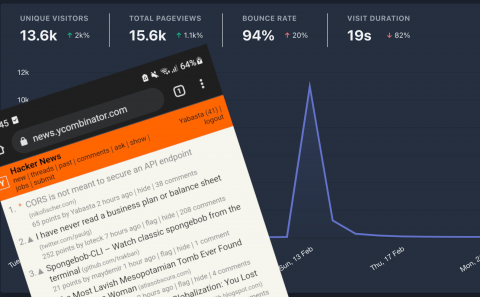
On 13.02.2022 I published this article. Within an hour of publication, the article appeared at #1 on Hacker News. I would like to show in this post how many hits I had as a result, what it brought in the long term and how you can do that at all.
This blog is not old: I published my first article here in February 2021. I don't write regularly either, so the hits have been rather low so far. In May 2021, I had just 16 unique visitors. I was able to more than double this number in June when I already had 36 unique visitors.
For your information: I use the open-source analytics tool Plausible to analyze the visits to my website. It works completely without cookies and does not store any personal data. I wrote an article about how to install Plausible on a Digitalocean droplet.
Traffic after the #1 ranking at Hacker News
On the day the article ranked #1 on Hacker News, I had 11,000 unique visitors. For comparison: in the days before I only had about 20 to 30 hits per day.
So the plausible graph for February looks very unique:
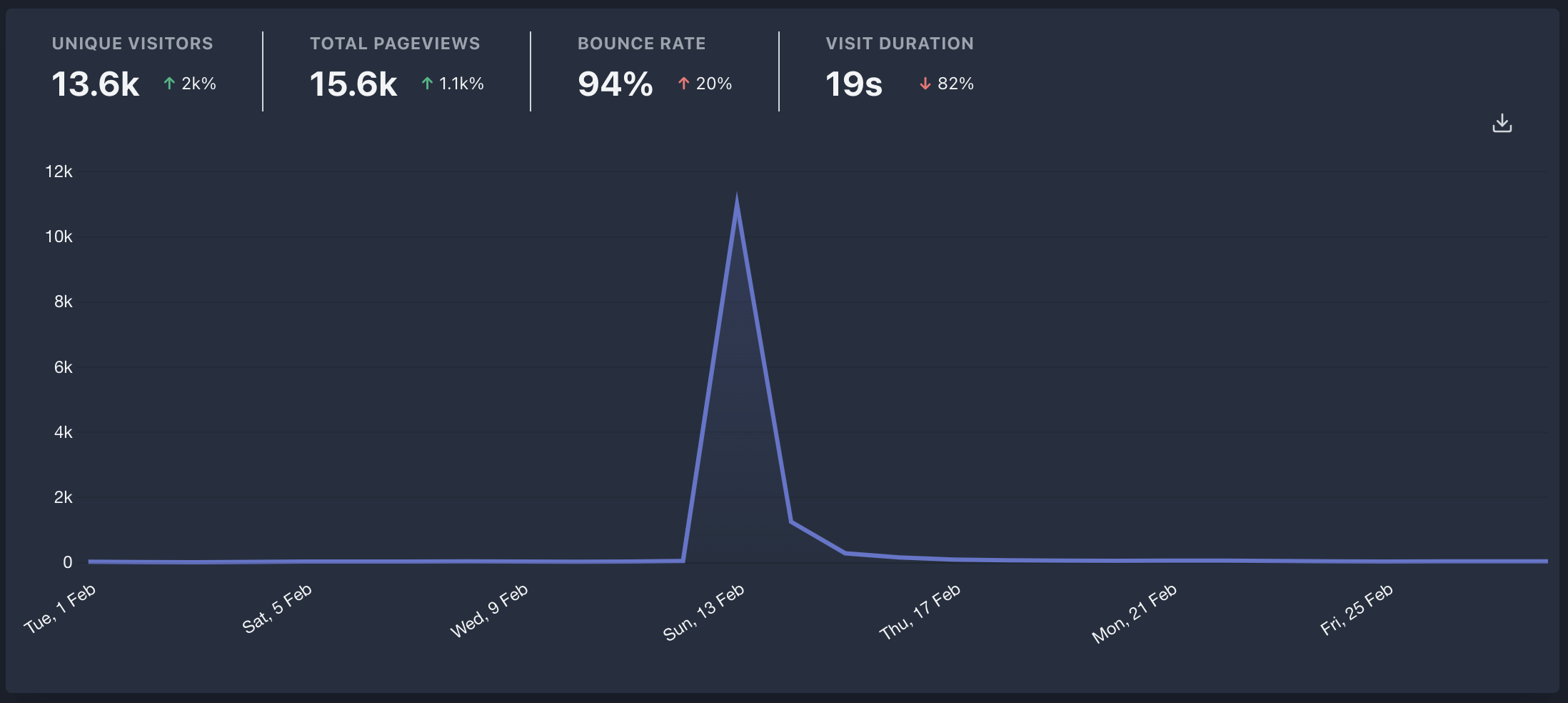
What's interesting for me is the following week: the article itself ranked at #1 for about 12 hours and then gradually moved further down. In the analysis of the hits, I was able to count 1,256 unique visitors on the day after the placement, i.e. on 14 February 2022. The majority, 705 to be exact, came directly from the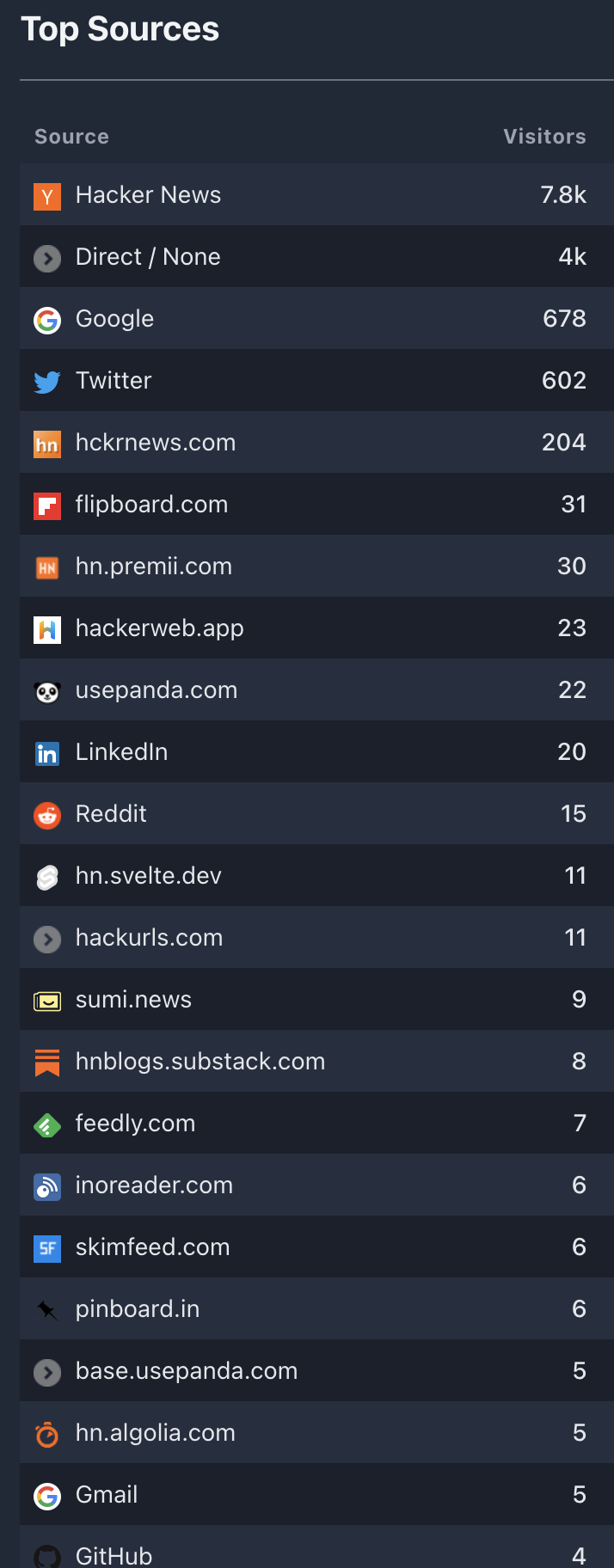 Hacker News website. The rest came from various other sources related to Hacker News. First and foremost, other news aggregators mirror the content of Hacker News.
In total, the article has been accessed 13,572 times to date (18 April 2022).
Slight increase in average hits
As I write this article, it is already mid-April. A few weeks have already passed since the article was published. The average number of hits has leveled off in the meantime and is much higher than in the days before the publication: I currently have an average of 33 unique visitors per day (compared to 25 unique visitors before the publication).
No measurable increase in newsletter subscriptions
Before my placement at Hacker News, I had an average of 2 newsletter sign-ups per week. Despite the high traffic in February, this has not changed. In general, the bounce rate of visitors through Hacker News was very high, meaning: most visitors left my site again after accessing the viral article.
How to get a #1 ranking on Hacker News
Is this a random success or can it be repeated? I think so. Hacker News thrives on catchy headlines and technically compressed topics. So the tools have to be right: Choose a topic from the Hacker News range of topics.
- Software
- Technology
- Science
- Psychology
It was the second article I submitted to Hacker News that made it to the #1 ranking. Sure: certainly a lucky hit. The hit rate of 50% certainly can't be extrapolated. But at the end of the day, it's about creating opportunities and looking for opportunities. This is true on both a small and a large scale: whether I post a contribution to Hacker News, buy a share or go for a walk and discover my dream house for sale: Those who walk through the world with their eyes open, who see things and recognize the opportunities behind them, will be successful in the end. A few far-fetched "2-cents", but for me an important philosophy of life.
Comments