You think Google Analytics helps your SEO? Think again. Google uses completely different, much more sophisticated methods to evaluate whether your website delights or frustrates users. And most website owners don't know about it.
The Widespread Google Analytics Myth
Millions of website owners install Google Analytics hoping to improve their SEO rankings. The logic seems simple: "If Google sees that users like my site, I'll rank better."
In the rapidly evolving digital landscape, understanding the effectiveness of your online marketing efforts is crucial. One tool that has proven indispensable in this regard is Plausible Analytics. And at the heart of Plausible's tracking prowess lies the intelligent utilization of UTM parameters. In this article, we delve into the world of UTM parameters and explore their various types and applications within Plausible Analytics.
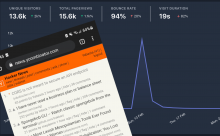
On 13.02.2022 I published this article. Within an hour of publication, the article appeared at #1 on Hacker News. I would like to show in this post how many hits I had as a result, what it brought in the long term and how you can do that at all.
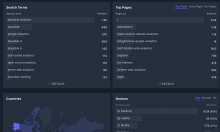
I already wrote about how great Plausible is as an alternative to Google Analytics a few days ago in this article. Today I want to show you how to integrate Google Search Console to see what keywords users are using to land on your site.
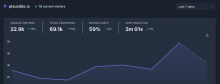
Plausible is a minimalistic and DSGVO-compliant alternative to Google Analytics. It works completely without cookies and is also open source. Quite a few good arguments. It's high time to turn my back on Google Analytics anyway, so I'm taking a closer look at Plausible
The goal: Give Plausible a chance and install my own Plausible server on a DigitalOcean droplet to track this website.